
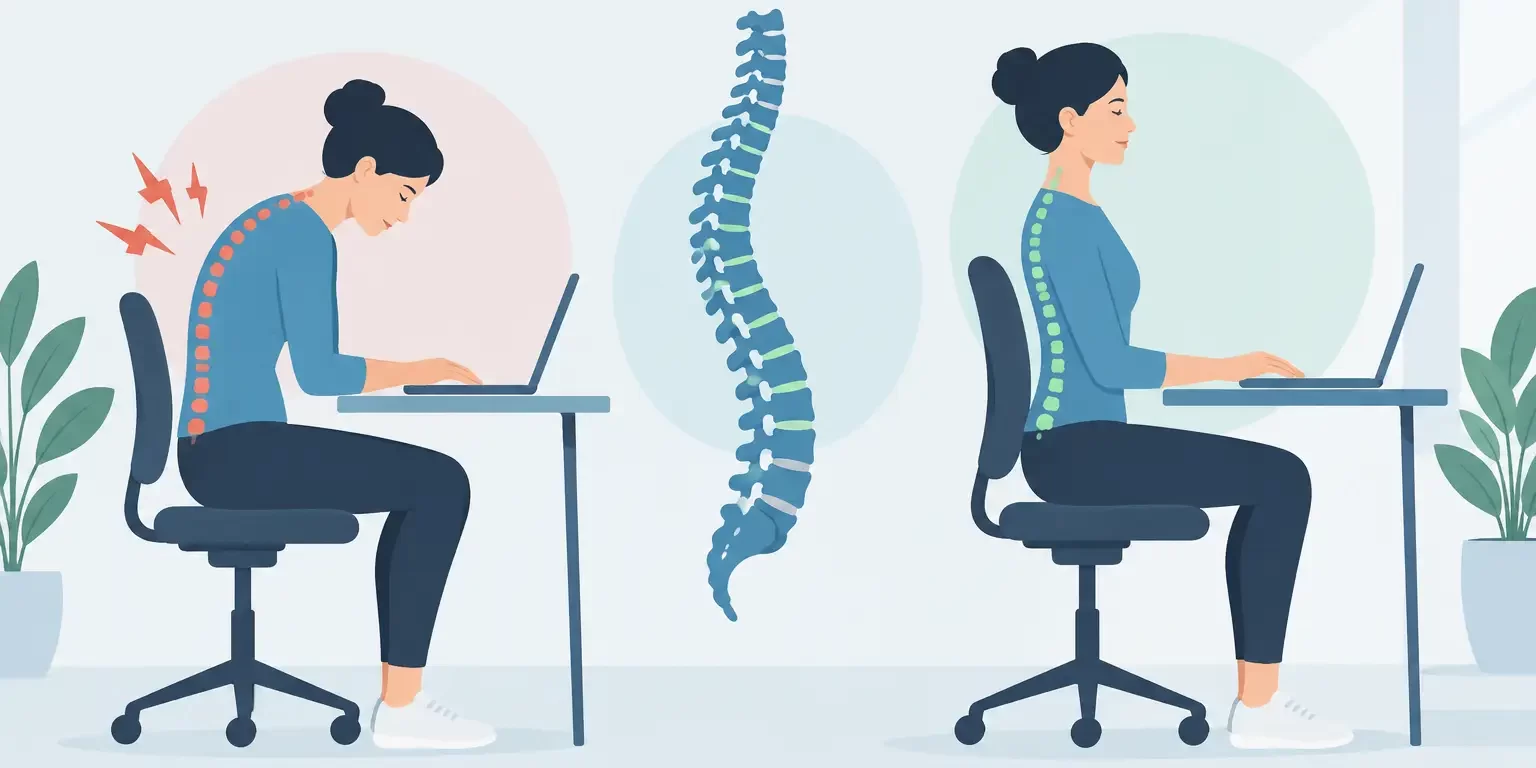
The ache that starts between your shoulder blades after a long workday, the tight neck you notice while driving home, or the low back fatigue that appears after standing in the kitchen are not always caused by one dramatic injury. Often, they reflect the cumulative effect of how posture affects spinal stability throughout the day. Your body is built to move, shift, bend, and carry load. When certain positions become your default for hours at a time, the muscles and joints that support your spine can be asked to work in less efficient ways.
Posture is not about forcing yourself into a stiff, military-style position. It is about helping your body distribute forces well enough that you can work, exercise, care for your family, and rest with less unnecessary strain. Understanding the connection between posture and spinal stability can help you make practical changes before recurring discomfort becomes a bigger disruption.
What Spinal Stability Actually Means
Spinal stability is your body’s ability to keep the vertebrae controlled and supported during movement and while holding positions. It does not mean your back should be rigid. A healthy spine needs mobility as well as control. You need to be able to turn to check traffic, reach into the back seat, lift a grocery bag, and get down to play with your children without feeling unsteady or overly guarded.
That control comes from several systems working together. The discs, joints, and ligaments provide passive support. Muscles in the trunk, hips, back, and neck provide active support. Your nervous system coordinates timing, telling muscles when to engage and how much force is needed for a task. When these systems share the work effectively, your spine can adapt to everyday demands.
Posture influences that workload. A position is not automatically harmful simply because it looks less than perfect. The concern is usually duration, repetition, existing weakness or injury, and how well your body can recover afterward. Slouching for a few minutes on the couch is different from spending eight hours each day with your head forward, shoulders rounded, and low back unsupported.
How Posture Affects Spinal Stability During Daily Life
Forward head posture can overload the neck
When the head sits forward of the shoulders, the neck muscles must work harder to hold it up. This position is common when looking down at a phone, leaning toward a laptop, or driving with the seat and headrest poorly adjusted. Over time, the muscles at the back of the neck and upper shoulders may become tight and fatigued, while other muscles may not contribute as efficiently.
This does not mean that every person with a forward head position has pain, or that pain is caused by posture alone. Sleep quality, stress, repetitive work, old injuries, and activity level can all play a role. Still, improving head and upper-back positioning can reduce unnecessary load for many people with recurring neck tension or headaches associated with muscle strain.
Slumped sitting changes how the low back is supported
A relaxed, slouched position often rolls the pelvis backward and flattens the natural curve of the lower back. In this posture, the passive tissues of the spine may take on more load while the deep trunk and hip muscles contribute less effectively. After enough time, getting up from the chair can feel stiff, achy, or unstable.
On the other hand, trying to sit perfectly upright and tense all day can be tiring too. The goal is supported, comfortable sitting with regular position changes. A chair that lets your feet rest on the floor, supports your lower back, and allows your screen to sit closer to eye level can make a meaningful difference. Even then, no chair replaces movement.
Standing posture affects the whole chain
Standing with most of your weight on one leg, locking the knees, or pushing the hips far forward can change how the low back, pelvis, knees, and feet share force. These habits are especially common during long shifts, while waiting in line, or when holding a child on one hip. The body can usually tolerate these positions briefly, but relying on them repeatedly may contribute to muscle fatigue and uneven stress.
A more balanced standing position usually feels grounded rather than forced: weight spread through both feet, knees relaxed, rib cage stacked comfortably over the pelvis, and shoulders not pulled aggressively backward. Small adjustments are often more useful than trying to hold one exact posture.
Poor lifting mechanics can challenge stability quickly
Posture matters most when load is added. Reaching forward with a rounded back to lift a laundry basket, twisting while carrying a box, or picking up a child from an awkward angle can demand more from the spine than the muscles are prepared to control. That is when a minor weakness, fatigue, or old injury may become noticeable.
For everyday lifting, get close to the object, use your hips and legs, keep the item near your body, and avoid twisting under load when possible. The best technique still depends on the object, your strength, and the setting. There is no single perfect lift for every situation, but preparation and control matter.
The Bigger Issue Is Often Staying Still
One of the most helpful ideas for busy adults is this: the best posture is often the next posture. Your tissues benefit from variety. A position that feels comfortable for 20 minutes can become uncomfortable after two hours because the same muscles and joints are carrying the same demand without a break.
If you work at a desk, stand up between tasks, take a brief walk during calls, or do a few gentle shoulder rolls and hip movements. If you drive often, adjust your seat so you can reach the pedals without stretching and take movement breaks on longer trips. If you stand for work, shift your stance, walk when practical, and avoid locking into one position.
Movement breaks do not need to become another item on an already crowded to-do list. A minute or two several times a day can be more realistic and more useful than one long stretching session you never have time to do.
Building Better Support for Your Spine
Improving spinal stability is usually less about chasing perfect posture and more about building capacity. When your muscles are stronger, your joints move well, and your body is accustomed to regular activity, everyday positions tend to feel less demanding.
Start with your work and home setup
Set your monitor near eye level, keep frequently used items within easy reach, and consider using a small lumbar support if your chair does not support your lower back. Keep your phone higher when possible instead of repeatedly bending your neck toward it. At home, notice the positions that bring on symptoms, such as leaning over the counter, sinking into a soft couch, or carrying a heavy bag on the same shoulder every day.
Strengthen the muscles that share the load
A well-rounded program may include walking, gentle core training, hip strengthening, upper-back exercises, and mobility work suited to your current ability. The right starting point depends on your health history and symptoms. If an exercise causes sharp pain, radiating symptoms, dizziness, or increasing discomfort, stop and seek professional guidance rather than pushing through it.
Give your body time to adapt
Postural habits develop over months or years, so meaningful change is rarely instant. It is reasonable to expect some muscle fatigue as you begin moving differently or becoming more active. Persistent pain, worsening symptoms, numbness, weakness, or pain that travels into an arm or leg deserves an evaluation.
When Chiropractic Care May Help
Posture-related discomfort often involves more than one factor: joint movement, muscle tension, daily habits, prior injuries, and activity demands can overlap. A chiropractic evaluation can help identify areas of restricted movement, postural stress, and functional imbalance that may be contributing to your symptoms.
At Core Wellness Chiropractic, care is designed around where you are starting and what you need to do in daily life. Relief care may focus on reducing discomfort and restoring easier movement. Corrective care can address underlying movement patterns and support more lasting improvement. Wellness or prevention care helps many patients stay proactive as work, exercise, family demands, and aging continue to challenge the spine.
Chiropractic adjustments may be part of a care plan, along with guidance on posture, movement, and at-home strategies. No two patients have the same needs, and a good plan should account for your symptoms, goals, health history, and response to care. For Western New York patients balancing busy schedules, convenient access to consistent care can make it easier to follow through on those healthy changes.
A More Useful Way to Think About Posture
Instead of asking, “Is my posture bad?” try asking, “Can my body comfortably handle the positions and activities my day requires?” That question leads to practical solutions: move more often, organize your environment, build strength gradually, and get help when discomfort keeps returning.
Your spine does not need perfection. It needs thoughtful support, regular movement, and attention before small signals become the reason you miss work, skip activities, or sit out the moments that matter.