
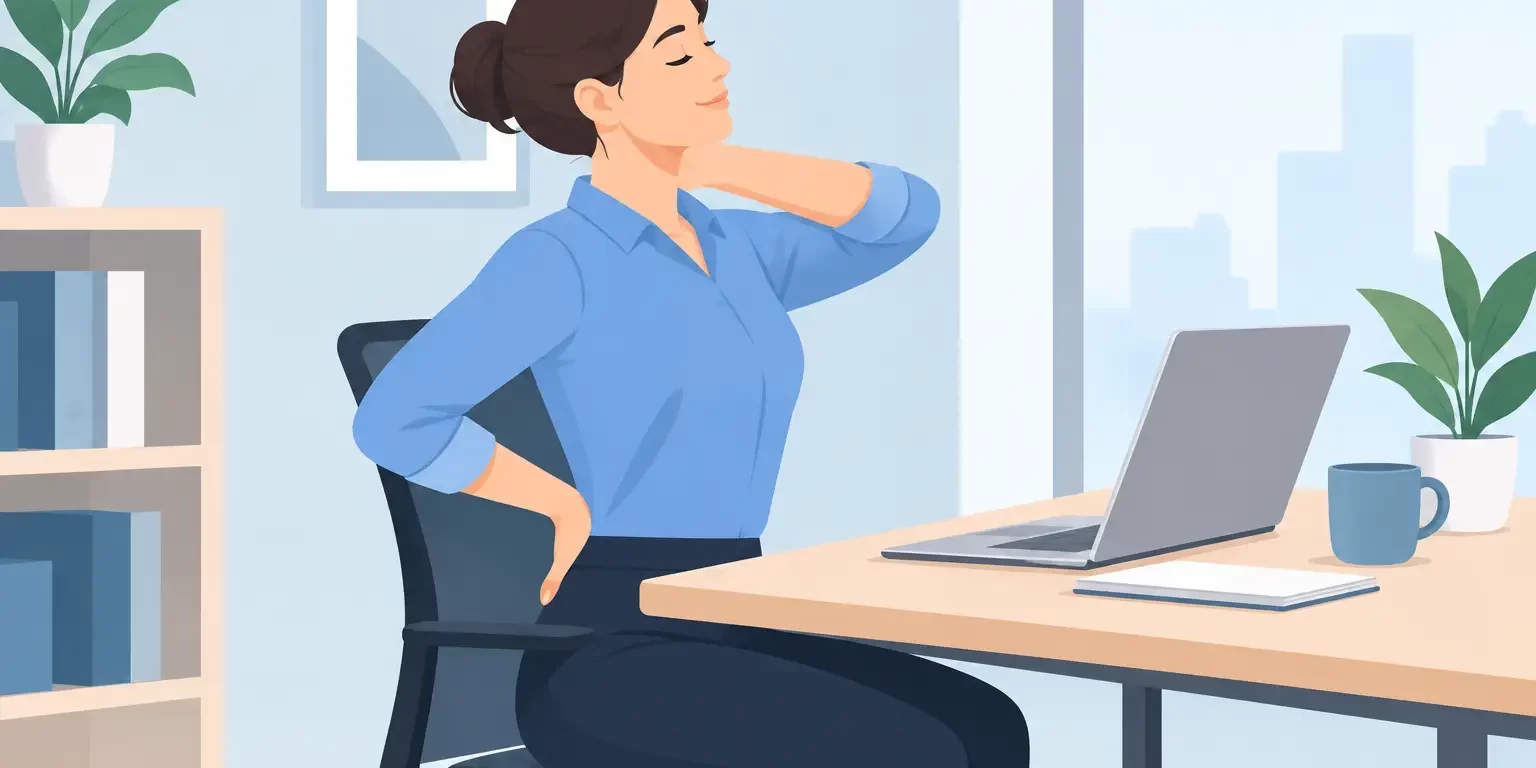
The ache that starts between your shoulders at 2:30 p.m. is rarely just a bad afternoon. For many professionals, office worker pain recovery means addressing the repeated habits behind neck stiffness, low back pain, headaches, tight hips, and sore wrists – not simply waiting for the discomfort to pass after work.
A desk job may not look physically demanding, but the body experiences prolonged sitting, screen-focused posture, repetitive hand movements, and stress as real physical strain. The good news is that small daily changes, paired with appropriate hands-on care when needed, can help you move more comfortably and protect your spinal health over time.
Why desk work causes pain that keeps returning
The issue is not that sitting is always harmful. It is that most people stay in one position for far too long. When the head gradually moves forward to meet a screen, the muscles of the neck and upper back work harder to support it. Rounded shoulders can tighten the chest while weakening postural support through the upper back. Meanwhile, long periods in a chair can leave the hips and low back feeling compressed and stiff.
Your workstation can add to the problem. A laptop positioned too low, a chair without adequate support, a monitor off to one side, or a keyboard that forces the wrists into an awkward angle can all increase strain. Even a well-designed desk setup cannot fully compensate for eight hours without meaningful movement.
Stress matters, too. Many office workers hold tension in the jaw, shoulders, and upper back while meeting deadlines or managing a busy schedule. That tension can become a familiar pattern, making it difficult to tell where normal fatigue ends and an injury or spinal problem begins.
Office worker pain recovery begins with a clear assessment
Recurring pain deserves more than random stretching or another quick fix. A chiropractic consultation and examination can help identify how posture, spinal motion, muscle tension, and daily activities may be contributing to your symptoms. The goal is to understand your individual pattern of discomfort and create a plan that fits your work and home life.
For some patients, care starts with relief care. This stage focuses on reducing pain, improving mobility, and helping the body calm down after a flare-up. Chiropractic adjustments may be used to restore joint movement and address areas of spinal restriction, while guidance on posture and activity helps reduce the same strain between visits.
Once symptoms are improving, corrective care can focus on the habits and movement patterns that allowed the problem to develop or return. This may include building better workstation routines, improving mobility, and supporting healthier posture. Wellness or prevention care is the long-term stage for patients who want to maintain progress, stay active, and address small issues before they become major interruptions.
The number and frequency of visits depend on your condition, goals, health history, and response to care. A recent strain after an unusually demanding project may require a different approach than pain that has built slowly over several years.
Adjust your desk for your body
Ergonomics are not about creating a picture-perfect desk. They are about reducing unnecessary strain so your body can stay in a more natural working position.
Start with your screen. The top third of the monitor should generally be near eye level, and the screen should sit directly in front of you rather than off to one side. If you use a laptop most of the day, consider raising the screen and using a separate keyboard and mouse. Looking down at a laptop for hours is a common reason for neck and upper-back discomfort.
Sit with your feet supported on the floor or a stable footrest. Your hips should be positioned comfortably back in the chair, with the low back supported. Aim for elbows close to your sides and forearms roughly parallel to the floor when typing. You do not need to sit rigidly upright all day. In fact, changing positions is often more helpful than trying to hold one “perfect” posture.
If your chair, desk, or workspace cannot be fully changed, work with what you can control. A small lumbar cushion, an external keyboard, a headset for frequent phone calls, or a monitor riser can make a meaningful difference without requiring a complete office renovation.
The best posture is the next posture
Posture advice is often misunderstood as a command to sit perfectly still. The body benefits from variety. Shift in your chair, stand during a phone call, walk to refill your water, or briefly work from a standing surface when appropriate.
A useful goal is to interrupt long stretches of sitting every 30 to 60 minutes. The break does not need to be a workout. Two minutes of walking, a few shoulder rolls, gentle neck movement, or standing tall and taking slow breaths can reduce the feeling of being locked into your desk position.
A realistic movement routine for busy workdays
Consistency matters more than intensity. A ten-minute stretch routine you can repeat most days is more valuable than an ambitious plan that disappears after a week. If a movement increases sharp pain, numbness, dizziness, or symptoms traveling into an arm or leg, stop and seek professional guidance.
Try a simple reset during the day: stand up, gently roll the shoulders backward several times, and open the chest by bringing your arms slightly behind you. Then take a short walk and allow your arms to swing naturally. Follow with slow, comfortable neck turns from side to side. Avoid forcing any movement or aggressively cracking your own neck.
For low-back and hip stiffness, a brief walk is often a better starting point than staying seated and stretching intensely. Gentle hip motion, changing your position, and gradually increasing activity can help the body feel less guarded. Outside of work, regular walking, strength training appropriate for your ability, and activities you enjoy can support long-term spinal health.
Do not let after-work habits erase your progress
Many people leave the office only to spend the evening on a couch with a phone in hand, head bent forward again. Recovery is not about being perfect at home, but it does help to notice where the same positions repeat.
Give your body a transition after work. Take a short walk before settling in, prepare dinner while standing with both feet supported, or spend a few minutes moving before opening your laptop again. If you commute, adjust the car seat so you are not reaching for the steering wheel or slumping away from the backrest.
Sleep can also influence how your body feels the next day. A pillow should support your neck without forcing it sharply up or down. The best sleep position varies, but many people are more comfortable on their side or back with their spine supported in a neutral position. If you consistently wake with neck or back pain, it is worth discussing during your examination.
When pain needs prompt attention
Most desk-related aches improve with movement, better work habits, and appropriate care. Still, certain symptoms require prompt medical evaluation. Seek urgent care for severe pain after a significant fall or accident, sudden weakness, loss of bowel or bladder control, numbness in the groin area, chest pain, unexplained fever, or pain accompanied by major unexplained weight loss.
You should also schedule an evaluation when pain persists, keeps returning, disrupts sleep, causes headaches or tingling, or limits your ability to work, exercise, or care for your family. Waiting until discomfort becomes unbearable can make recovery feel more complicated than it needs to be.
Make care convenient enough to continue
A plan only works when it fits real life. For working adults in Western New York, access can be one of the biggest barriers to consistent care. Evening and weekend availability, walk-in options, and straightforward direct-pay pricing can make it easier to get evaluated without rearranging every responsibility or relying on insurance approval.
At Core Wellness Chiropractic, care is designed around clear stages and practical education, so patients understand what is being addressed and what they can do between visits. Chiropractic care is drug-free and non-surgical, but it should still be individualized. The right plan balances hands-on treatment, movement, work modifications, and realistic expectations rather than promising an overnight cure.
Your desk may be where the discomfort shows up, but it does not have to dictate how you feel at the end of the day. Start with one change you can repeat this week – a better screen height, a walking break, or an evaluation for pain that has been lingering – and give your body the support it has been asking for.