
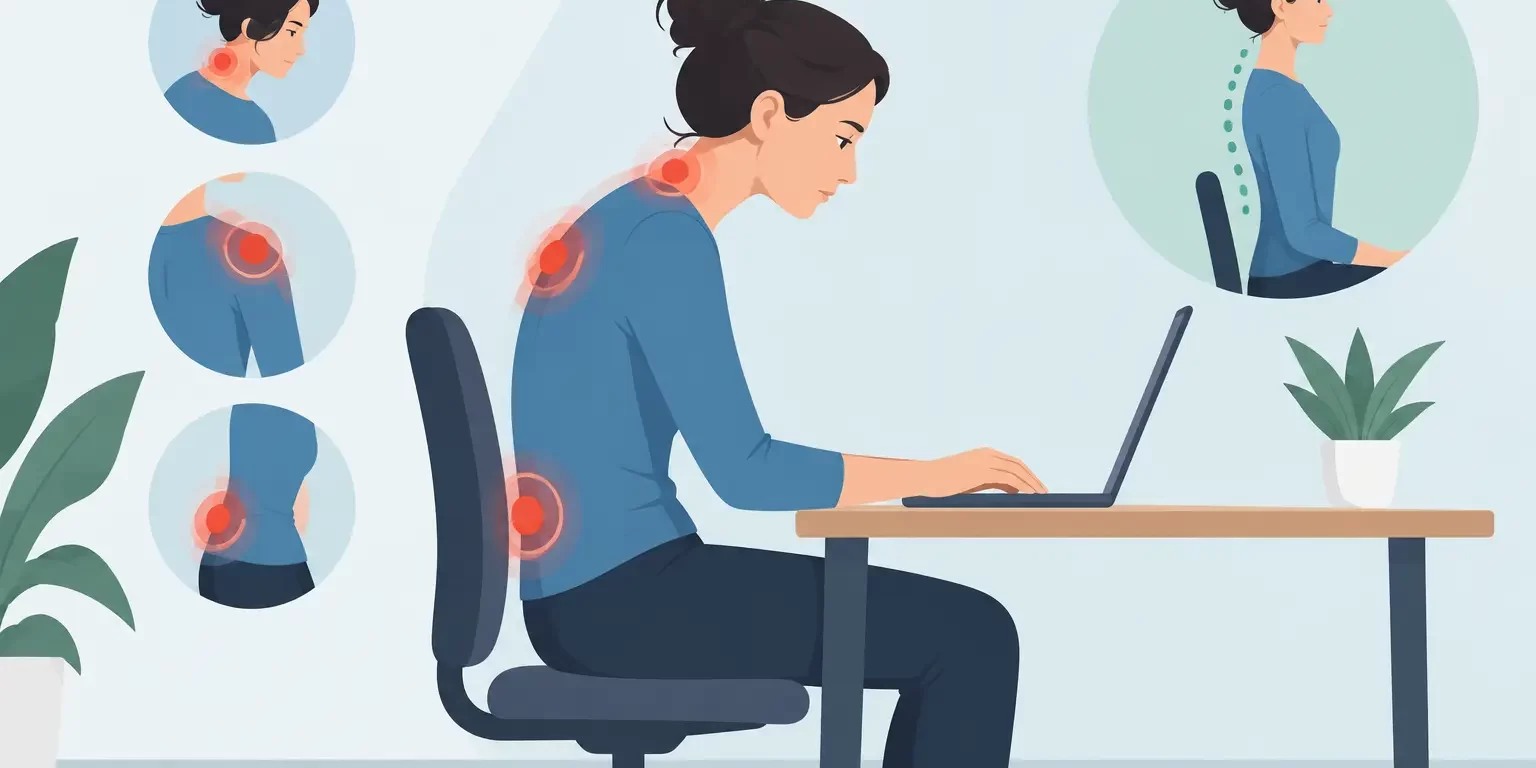
Your shoulders creep toward your ears during a long workday. Your low back feels tight after the commute. By evening, a familiar ache has settled between your shoulder blades. Can poor posture cause pain? For many people, yes. Posture is not the only possible cause of discomfort, but the way your body is positioned and moves throughout the day can place repeated stress on muscles, joints, and spinal structures.
The good news is that posture-related discomfort is often something you can improve. It usually does not require holding yourself rigidly upright all day. More often, relief comes from understanding where strain is building, moving more often, and addressing underlying spinal or muscle issues before they become a bigger disruption to daily life.
How Poor Posture Can Create Pain
Posture is simply how you hold and support your body while sitting, standing, walking, sleeping, lifting, or using a device. When the head, shoulders, rib cage, pelvis, and spine are reasonably well aligned, the body can distribute forces more efficiently. Muscles still work, but they are not forced to compensate as aggressively.
When you spend hours with your head pushed forward, your upper back rounded, or your pelvis tucked or tilted, certain tissues can take on more work than they were designed to handle for long periods. The muscles in the neck and upper back may tighten to help hold the head up. The muscles of the chest and front of the hips may become short and restricted. The low back may feel compressed or overworked as it tries to stabilize the body.
This is why a desk worker may develop neck stiffness and headaches, while someone who stands with weight shifted to one side may notice hip or low-back discomfort. The pain is real, even if the trigger seems ordinary. Repeated low-level strain can add up over days, weeks, and months.
The problem is often prolonged position, not one “bad” position
It is easy to blame every ache on slouching. In reality, there is no single perfect posture that must be held all day. Even a well-positioned body can become sore if it stays still too long.
A more useful way to think about posture is capacity and variety. Can your body tolerate the positions required by your work, parenting responsibilities, workouts, driving, and sleep? Are you changing positions before discomfort becomes intense? A slightly rounded position for a few minutes is usually not a crisis. Spending eight hours in that position without enough movement may be a different story.
Common Pain Patterns Linked to Postural Strain
Posture-related pain can show up in more places than the back. Because the spine, muscles, and joints work as a connected system, strain in one area can influence another.
Neck pain is especially common when the head stays in front of the shoulders while looking down at a phone or leaning toward a monitor. This forward-head position can leave the muscles at the base of the skull, neck, and upper shoulders working overtime. Some people also notice tension headaches, restricted neck motion, or aching that travels into the upper back.
Upper-back and shoulder discomfort may develop when rounded shoulders and a collapsed chest position make it harder for the shoulder blades to move well. You might feel a dull ache between the shoulder blades, burning across the tops of the shoulders, or stiffness after computer work.
Low-back pain can be influenced by prolonged sitting, poor workstation setup, weak or fatigued support muscles, and movement habits such as bending and lifting with a rounded back. Hip tightness and limited movement in the mid-back can also cause the low back to compensate.
Poor posture may also contribute to jaw tension, arm discomfort, or fatigue. That said, pain that travels down an arm or leg, involves numbness or weakness, or persists despite rest deserves a professional evaluation. Those symptoms may involve more than everyday postural strain.
Why Your Routine Matters More Than You Think
Most posture problems are not caused by one dramatic event. They are built into routine. Consider the moments that repeat every day: checking email at the kitchen table, carrying a child on the same hip, driving across Western New York traffic, looking down at a phone, or spending a shift on your feet with unsupportive shoes.
Your body adapts to what it does repeatedly. If a certain movement pattern is practiced often enough, muscles may become conditioned to that pattern while other muscles lose strength, endurance, or mobility. This does not mean your body is permanently “out of alignment.” It means it may need focused care and consistent new habits to move more comfortably.
Stress and sleep can matter, too. Stress often causes people to brace their shoulders and jaw without realizing it. Poor sleep can make the nervous system more sensitive to discomfort and reduce recovery from the previous day. Posture is one piece of the picture, but it is worth addressing because it is part of daily life.
Practical Ways to Reduce Posture-Related Pain
Small adjustments are generally more sustainable than trying to overhaul everything at once. Start by making your most frequent positions less demanding.
At a desk, place your screen near eye level so you are not constantly looking down. Keep frequently used items within easy reach, and support your low back comfortably rather than perching at the edge of the chair. Your feet should have a stable surface beneath them. If your chair or desk cannot be changed, use simple workarounds such as a cushion, a footrest, or a stack of sturdy books under a monitor.
During phone use, bring the device closer to eye level when possible. This may feel awkward at first, but it can reduce the time your neck spends bent forward. When driving, adjust the seat so you can reach the pedals and steering wheel without leaning forward or locking your elbows.
Movement breaks are just as valuable as setup changes. Every 30 to 60 minutes, stand up, walk briefly, gently roll your shoulders, or change positions. You do not need an elaborate routine. Regular movement gives joints and muscles a chance to share the workload differently.
Strength and mobility work can also help, especially when it is tailored to your needs. Walking, controlled core exercises, upper-back strengthening, and hip mobility may improve your ability to maintain comfortable positions. The right approach depends on your health history, activity level, current pain, and any previous injury. Pushing through sharp pain is not the goal.
When Posture Needs Professional Attention
If pain keeps returning despite better movement habits, an evaluation can help identify why. A chiropractor can assess posture, spinal motion, muscle tension, movement patterns, and areas of joint restriction that may be contributing to discomfort. Care may include chiropractic adjustments, recommendations for mobility or strengthening, and a plan based on your goals and daily demands.
At Core Wellness Chiropractic, care is structured around relief, corrective, and wellness phases. Relief care focuses on reducing current symptoms. Corrective care works on the underlying patterns that may be contributing to repeated strain. Wellness or prevention care supports continued spinal health once you are feeling better. The pace and recommendations should always reflect your exam findings, response to care, and personal goals.
Chiropractic care is not a substitute for emergency medical attention. Seek prompt care for severe pain after an accident, new bowel or bladder changes, fever with back pain, unexplained weight loss, progressive weakness, or numbness in the groin area. These symptoms need immediate medical assessment.
Better Posture Is About Feeling Capable, Not Looking Perfect
The goal is not to hold a picture-perfect pose or blame yourself for every ache. A healthy posture strategy helps you feel more comfortable getting through work, family responsibilities, exercise, and the activities you enjoy.
Pay attention to the patterns your body is already showing you. If a certain position repeatedly brings on pain, stiffness, or fatigue, that is useful information. With regular movement, thoughtful support, and professional guidance when needed, you can build a body that feels less guarded and more ready for everyday life.




1 Comment