
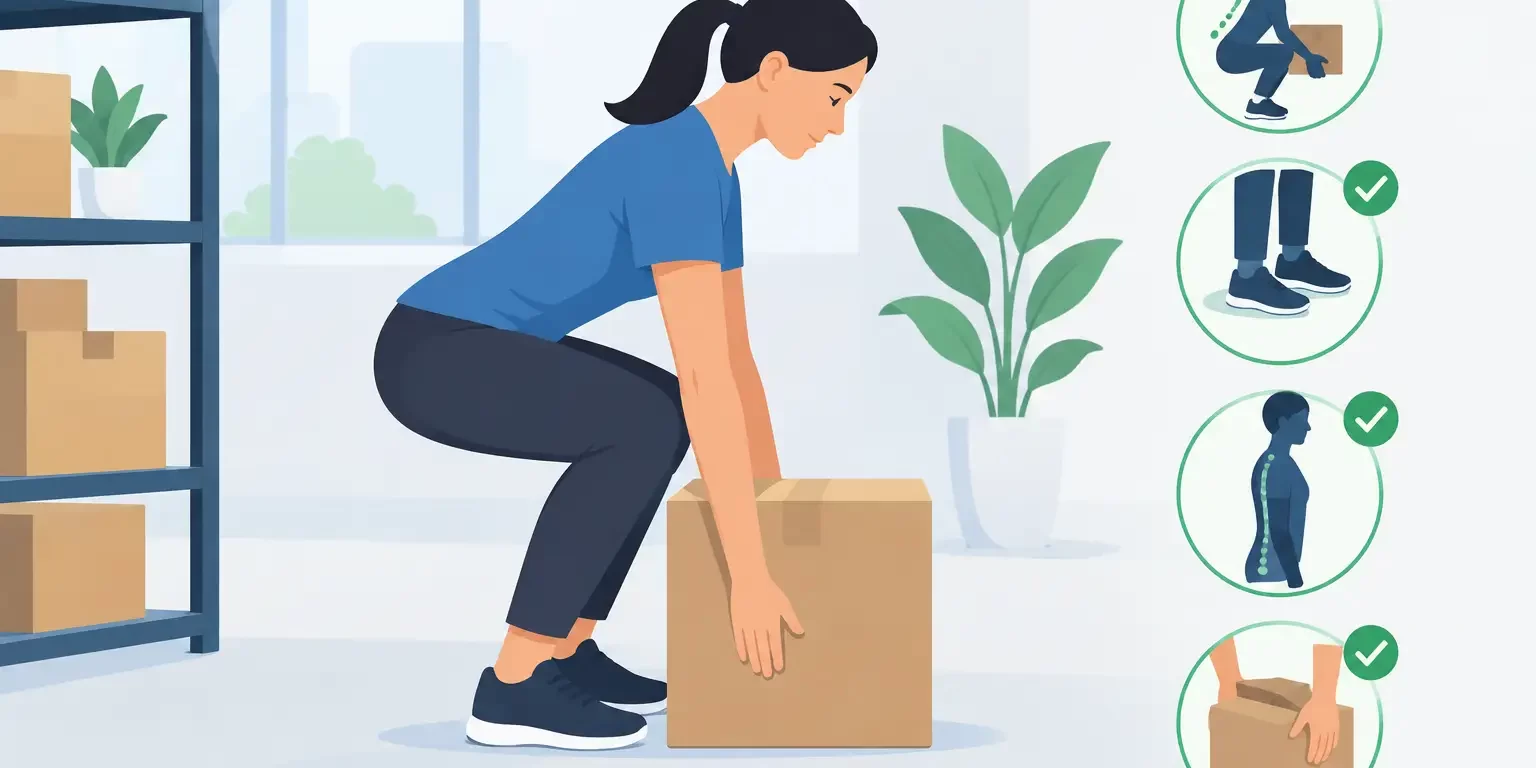
A heavy laundry basket, a case of bottled water, a child who wants to be carried, or a box at work can all create the same problem: your body is asked to handle weight in an awkward position. This guide to ergonomic lifting explains how to move everyday loads with less strain on your back, hips, shoulders, and knees – and how to recognize when lifting pain needs more attention.
Good lifting is not about proving strength or following one rigid rule. It is about keeping the load close, moving with control, and knowing when the task is too heavy, too bulky, or too awkward to do alone. Those choices can help protect your spine now and support better movement for years to come.
Why ergonomic lifting matters for your spine
Your spine is designed to move, bend, rotate, and carry load. Problems often arise when those motions are combined under pressure, especially when you bend forward, twist, and lift at the same time. A quick reach into a car trunk or a twist while holding a box can place far more stress on the lower back than the object’s weight alone would suggest.
Muscles, ligaments, discs, and joints all work together when you lift. Fatigue, poor footing, a rushed pace, or existing stiffness can make that coordination less effective. This is why back pain sometimes appears after a task that seemed minor. The final lift may not be the only cause. It may simply be the movement that overloaded an area already under stress.
Ergonomic lifting reduces unnecessary strain. It cannot guarantee that no injury will occur, but it gives your body a stronger, more stable position for handling weight.
A guide to ergonomic lifting, step by step
Before picking anything up, take a moment to assess the load. Can you estimate its weight? Is it stable, or could its contents shift? Can you get close to it, and is your path clear? If the object blocks your view, has no easy handholds, or feels heavier than expected, ask for help or use equipment such as a cart, dolly, or hand truck.
Start close to the load
Stand with your feet about shoulder-width apart and position yourself as close to the object as possible. The farther a load is held from your body, the greater the demand on your back and shoulders. Move your feet rather than reaching forward with your arms.
If you are lifting from the floor, bend at your hips and knees to lower yourself toward the object. Keep your chest open and your spine in a comfortable, neutral position. A neutral spine does not mean perfectly rigid. It means avoiding a deeply rounded or sharply arched posture while you prepare to lift.
Create a stable grip and brace gently
Get a secure grip before the object leaves the ground. Hold it close to your torso, ideally around waist level. Then gently tighten your abdominal muscles as though you are preparing for a light poke to the stomach. This creates support without forcing you to hold your breath or tense every muscle.
Lift smoothly by pressing through your feet and straightening your hips and knees together. Avoid jerking the load upward. Sudden movements make it harder for your body to coordinate and can increase strain on muscles that are not ready for the task.
Turn with your feet, not your waist
Once you are carrying the object, keep it close and face the direction you are moving. If you need to turn, take small steps and pivot with your feet. Do not plant your feet and twist through your low back while holding weight.
The same rule applies when setting an object down. Square your body with the destination, bend your hips and knees, and lower the load under control. Do not rush the last few inches. Many strains happen when someone reaches, twists, or drops their posture after most of the work seems finished.
The lifting habits that cause trouble
The most common lifting mistake is bending from the waist while the load sits away from the body. This position increases leverage against the lower back. Adding a twist, especially while trying to move quickly, makes the movement even less forgiving.
Holding your breath is another common issue. Briefly bracing during a very demanding lift can happen naturally, but consistently straining and breath-holding can raise tension and make you less aware of your form. Breathe steadily whenever possible.
Trying to “push through” pain is also risky. Muscle effort and mild fatigue are normal. Sharp pain, pain that travels into the buttock or leg, numbness, tingling, weakness, or a feeling that your back is giving out are not signals to ignore. Put the load down safely and reassess.
Ergonomic lifting looks different at home and work
The principles stay the same, but the setup changes with the task. At home, common challenges include lifting children, moving groceries, gardening, carrying pet supplies, and loading laundry. At work, repetitive lifting, tight storage areas, time pressure, and uneven loads may be the bigger concerns.
For groceries, make two lighter trips instead of one overloaded trip when possible. For laundry, place the basket on a sturdy raised surface before folding so you are not repeatedly bending to the floor. When lifting a child, get close, bend down to their level, and bring them toward your center before standing. Avoid reaching across a crib rail or car seat with your back rounded if there is another safe way to position yourself.
At work, adjust the environment whenever you can. Store frequently used items between knee and chest height. Keep aisles clear. Use team lifts for oversized or unstable items, even if the stated weight does not seem extreme. A large, awkward box can be more difficult to manage safely than a compact heavier object.
Build capacity, but respect your current limits
Proper form matters, yet your ability to lift comfortably also depends on general conditioning, mobility, sleep, recovery, and prior injury history. Strong legs, hips, core muscles, and upper back can all support better lifting mechanics. Regular walking, resistance training appropriate for your fitness level, and mobility work may help you feel more confident with daily physical demands.
Still, strength training is not a substitute for good judgment. A person who exercises regularly can get hurt by lifting a heavy object with a poor grip while twisting in a cramped space. Likewise, someone recovering from back pain may need to temporarily reduce lifting, change how they perform tasks, or get personalized guidance before returning to more demanding activity.
When back pain after lifting needs care
A mild ache that improves with rest, gentle movement, and a return to normal activity may be manageable. However, ongoing or recurring pain deserves a closer look, particularly if it affects work, sleep, exercise, or everyday responsibilities. Repeated episodes can be a sign that movement patterns, spinal function, or the demands placed on your body need to be addressed.
Seek urgent medical evaluation for severe pain after significant trauma, new loss of bowel or bladder control, numbness in the groin area, rapidly worsening weakness, fever, or unexplained weight loss. These symptoms require prompt assessment.
For non-emergency pain, chiropractic care may help identify areas of restricted motion, muscle tension, postural strain, and movement habits that contribute to discomfort. At Core Wellness Chiropractic, care can include a consultation, examination, chiropractic adjustments when appropriate, and a plan that supports relief first while helping patients work toward corrective care and ongoing wellness.
The best lift is often the one you modify before your back has to pay for it. Pause, get close, move deliberately, and give yourself permission to ask for help. Those small decisions can make everyday movement feel safer, stronger, and more sustainable.