
A stiff neck can turn a normal workday, school pickup, or drive through Western New York into a frustrating exercise in moving your whole body just to look over one shoulder. The best stretches for stiff neck discomfort are gentle, controlled movements that reduce muscle guarding without forcing an irritated joint or nerve to move farther than it can comfortably go.
Neck stiffness often follows hours at a computer, poor sleep posture, stress, repetitive lifting, or time spent looking down at a phone. Sometimes it is a short-term muscle issue. Other times, recurring tightness points to posture changes, joint restriction, old injuries, or strain in the upper back and shoulders. Stretching can be a helpful part of relief, but it works best when it is paired with better daily movement habits and professional care when symptoms persist.
Before You Stretch a Stiff Neck
Start with warmth and a realistic goal. A warm shower or heating pad for 10 to 15 minutes can make guarded muscles more willing to move. Then work within a comfortable range. You may feel mild tension or a gentle pulling sensation, but sharp pain, tingling, numbness, dizziness, nausea, or pain traveling into the arm are signs to stop.
Move slowly and breathe normally. Do not bounce, crank your head into position, or use your hand to force a deep stretch. With neck pain, more intensity is not always more effective. Short, consistent sessions usually help more than one aggressive attempt to “fix” the problem.
If neck stiffness began after a fall, car accident, sports collision, or other trauma, get evaluated before trying stretches. The same is true if you have severe headache, fever, new weakness, loss of coordination, trouble speaking, vision changes, or unexplained symptoms in your arms or hands.
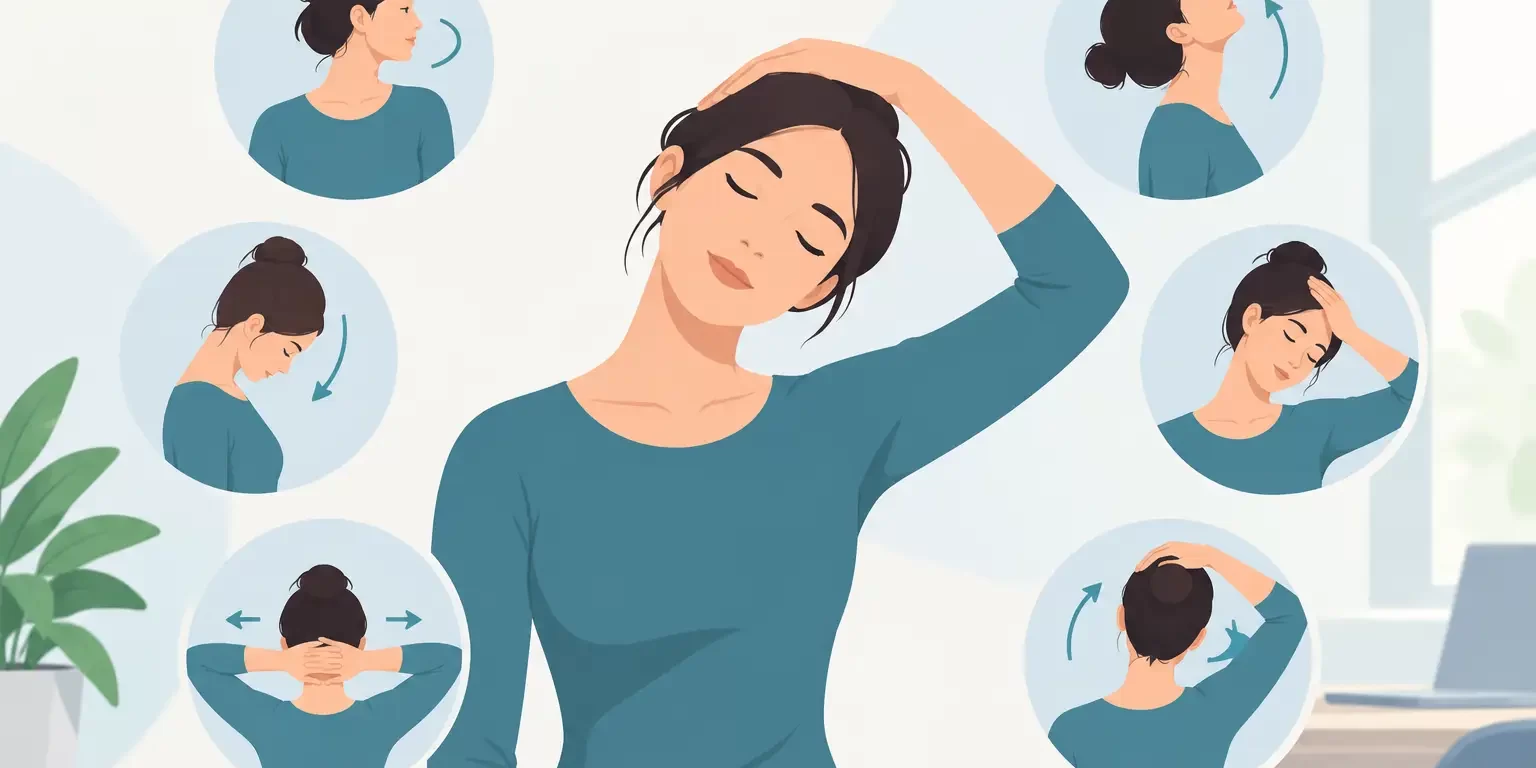
7 Best Stretches for Stiff Neck Pain Relief
Try these movements once or twice daily when your symptoms are mild to moderate. Hold each position for about 15 to 30 seconds, repeat two or three times per side when applicable, and keep the rest of your body relaxed.
1. Chin Tuck
A chin tuck helps counter the forward-head position that often develops during desk work, driving, and phone use. Sit or stand tall with your shoulders relaxed. Looking straight ahead, gently draw your chin backward as if you are making a small double chin. Keep your eyes level rather than tipping your head down.
You should feel a mild lengthening at the base of the skull and along the back of the neck. Hold briefly, release, and repeat 8 to 10 times. This is less of a deep stretch and more of a posture reset, which is exactly why it is useful throughout the day.
2. Upper Trapezius Stretch
The upper trapezius runs from the neck into the top of the shoulder. It often becomes tight after carrying a bag on one side, hunching over a keyboard, or holding stress in the shoulders.
Sit upright and let one arm rest at your side. Gently tip your opposite ear toward the opposite shoulder. For example, to stretch the right side, let your left ear move toward your left shoulder. Keep your shoulders down and avoid turning your chin upward. A light hand on the side of the head is optional, but it should add only gentle weight, never pressure.
3. Levator Scapulae Stretch
This small but hardworking muscle connects the upper shoulder blade to the neck. It is a common source of the “knot” felt between the neck and shoulder, especially after sleeping awkwardly or working at a screen.
To stretch the right side, turn your head about 45 degrees to the left, then gently look down toward your left armpit. Let your right arm hang loosely or hold the edge of your chair. You should feel the stretch along the back-right side of the neck and upper shoulder. Switch sides after holding.
4. Gentle Neck Rotation
Rotation is the movement you notice most when a stiff neck makes checking traffic difficult. Sit tall, keep your chin level, and slowly turn your head to the right as far as is comfortable. Pause, return to center, then turn left.
Avoid pulling your head around with your hands. If one side is noticeably more limited, do not repeatedly push into that restriction. Instead, use a smaller, comfortable range several times during the day. Gradual motion tells the nervous system that the movement is safe.
5. Side-to-Side Neck Glide
A neck glide targets stiffness without combining several movements at once. Face forward and keep your nose pointed straight ahead. Gently slide your head to the right, as if your ears were moving sideways over your shoulders, then return to center. Repeat to the left.
This may feel unusual at first because it is different from tilting the head. Keep the motion small and smooth. If it pinches or causes symptoms down the arm, stop and choose a more comfortable exercise instead.
6. Doorway Chest Stretch
A stiff neck is not always only a neck problem. Tight chest muscles pull the shoulders forward, which can increase the workload on the neck and upper back. Stand in an open doorway with your forearms against the frame and elbows slightly below shoulder height. Step forward slowly until you feel a stretch across the chest and front of the shoulders.
Keep your ribs from flaring and do not lean aggressively. Hold the stretch, then step back. Opening the chest can make it easier to maintain a more natural head and shoulder position afterward.
7. Thread-the-Needle Upper Back Stretch
The upper back, or thoracic spine, needs to move well so the neck does not have to do all the work. Begin on your hands and knees. Slide your right arm underneath your left arm, allowing your right shoulder and the side of your head to move gently toward the floor. Keep the movement comfortable and breathe into the upper back.
Hold, return slowly, and repeat on the other side. If getting to the floor is uncomfortable, this stretch can be modified in a chair by rotating gently and reaching one arm across the body.
Why Stretching Alone Sometimes Is Not Enough
A stretch can relax a tight muscle, but it may not correct the reason that muscle keeps tightening. For instance, a workstation that places the screen too low, a pillow that leaves the neck unsupported, or a recurring spinal joint restriction can bring discomfort back quickly.
This does not mean you need perfect posture every minute. Bodies are built to move, not to hold one “ideal” position all day. The practical goal is variety. Change positions regularly, stand up at least once each hour, bring screens closer to eye level, and avoid holding your phone in your lap for long stretches of time.
Sleeping position matters as well. A pillow should fill the space between your head and mattress without pushing your neck sharply up or down. Side sleepers often benefit from a pillow that keeps the head level with the spine, while back sleepers generally need less height. Stomach sleeping can place the neck in prolonged rotation and may aggravate stiffness for some people.
When to Seek Help for Neck Stiffness
Consider a professional evaluation if your neck pain keeps returning, lasts more than a few days without improvement, limits work or sleep, or is accompanied by headaches, shoulder pain, arm symptoms, or reduced range of motion. Recurring symptoms deserve more than temporary relief.
At Core Wellness Chiropractic, care begins by understanding what is contributing to your discomfort, not simply where it hurts today. A chiropractic examination can help identify spinal restrictions, postural stress, and movement patterns that may be affecting your neck. Care may include chiropractic adjustments and a plan that supports relief now while addressing the habits and function needed for longer-term wellness.
For many patients, the right approach includes gentle movement at home, hands-on care when appropriate, and a plan realistic enough to fit around work, family, and everyday life. Your neck should not dictate how you drive, sleep, exercise, or get through the day. Start gently, listen to your symptoms, and seek guidance when stiffness keeps asking for your attention.